NEWS & STORIES
Sumatra trip notes |
|
Filed under On The Road
I have just returned from a fascinating trip to Sumatra, where I was exposed to some beautiful coffees, and some lovely farms, landscapes, and people. It was my first visit to this coffee-growing region and I came away with a much better understanding of how coffee is typically processed in this part of the, and a great appreciation for the complexities of delivering high quality coffee to the discerning customer.
Here are some things I learned...
A lot of coffee is produced in Indonesia.
Around 70 million 60KG bags a year to be exact. However, only a quarter of this production is Arabica coffee.
The way they process coffee is quite unique.
Coffee processing in Sumatra is largely set by a historical standard, rather than a modern one. While a few coffees in Sumatra are fully washed or naturally processed, most are 'semi washed' – or 'giling basah' as they say locally, which translates to 'wet hulling'.
Typically, growers pulp the cherries on the farm using basic pulping machines. Pulped coffee is then left to ferment in bags or baskets overnight (around 12–14 hours), and then washed to remove the residual mucilage.
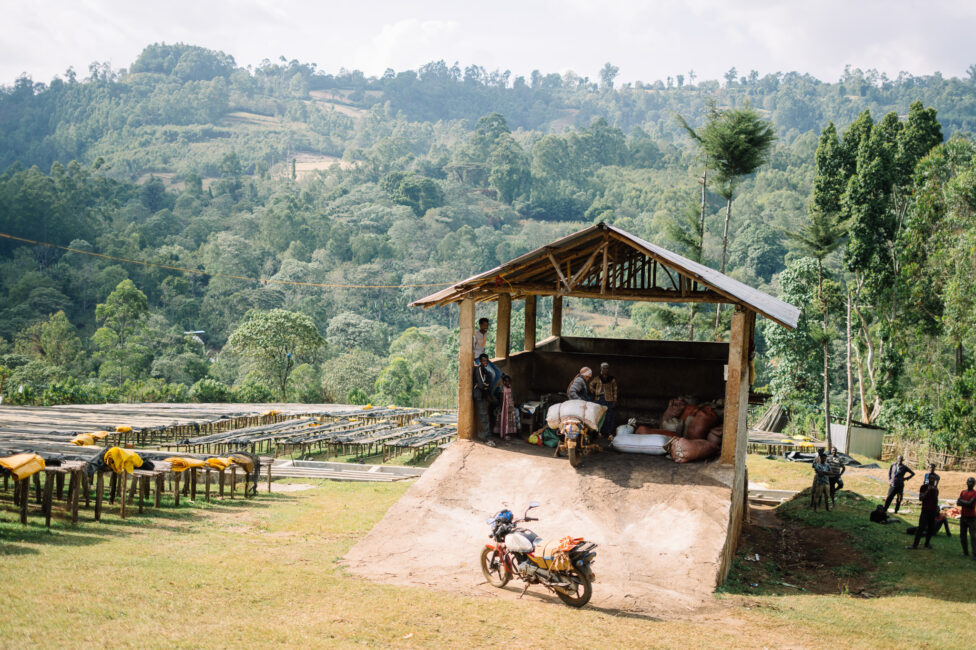
At this point, the coffee in parchment is sold to a local collection station where it is partially dried for around one day. The beans are then hulled to remove the parchment, revealing a white, slightly swollen bean. As they dry again on patios, the beans quickly change colour to an emerald green.
It's all really complex.
Due to the relatively high prices for semi-prepared coffee in the internal market (which attracts much higher prices than in Latin America or Africa), the coffee passes through many hands. Typically, growers hand-pulp (or occasionally machine-pulp) the coffee on their farms and then offer it for sale at the local village market, or deliver it very wet (at, say, 80% humidity) to a collection station nearby. The mills have a network of local representatives in the growing areas that buy cherries, partially dried parchment, fully dried parchment, and part and fully dried green beans, at varying degrees of preparation.
Often, coffees go through at least two collection stations; one where the coffee is partially dried in parchment and another where the green beans without parchment are dried. Most collection stations do not have hulling equipment, so hulling machines are rented and used to remove the parchment from the coffee. Uniquely, Indonesia has developed hulling machinery to mill even 18% wet parchment.
As the price for dried green coffee is disproportionately higher than the price paid for coffee in parchment, the current system is biased toward paying a premium for the traditionally processed ('semi washed') coffee. This discrepancy, combined with the fragmented operations of production, collection and processing, means there is a huge potential for quality variance between the best and worst coffees.
Traceability is difficult
There are very few estates or even growers' co-operatives in Sumatra. Most farms are very small, averaging around 0.5 hectares in Northern Sumatra to 1-1.5 hectares in Aceh. Typical production for a single farmer is 10 – 20 bags a year.
Most Arabica coffee in Sumatra is grown in two areas:
Northern Sumatra, around Lake Toba and Sidikalang, where one village called 'Lintong' has become synonymous with coffee production in the area. The farms in this region are very small––rarely over 0.5 hectares. Coffee here is grown for cash, while other crops are planted for food as well as sale.
Aceh Province is the northernmost province in Sumatra, in the area around Takengon. Curiously, coffees from this region are often defined as 'Mandheling', but this name is also used to describe coffees from Northern Sumatra. Farms in this region are bigger than in Northern Sumatra, averaging 1-2 hectares in size. Here, more farms are solely dedicated to coffee production and, unlike in Northern Sumatra, have been planted under canopy trees, which provide shade.
Neither 'Lintong' nor 'Mandheling' can be considered an accurate name for these fine coffees, any more than 'Santos' is a name for fine estate Brazils. These names don't accurately reflect the origins of the coffee––in part because the farms are so small, and also because the route to market is so complex, with many middlemen involved in the process of getting the coffee from farmer to exporter.
For the coffees that we sell from this region, we have adopted a more accurate naming system, which we hope to further refine in the future. While we obviously know the origins of Wahana Estate (the only single estate Sumatran coffee we currently offer), we have named the coffees in the less traceable lots in a manner that more accurately reflects the origins of the coffee. For example, we have named coffee from the Takengon region Aceh Takengon.
Some exciting developments
There were whispers while we were on tour that Indonesia might be a future location for the Cup of Excellence program. If this were to eventuate, it would do wonders for the specialty coffee industry in Sumatra.
One very exciting project that we were able to see first-hand was Wahana Estate, which is owned by our milling partner. Started in 2005, this coffee plantation has the potential to produce some excellent coffees. All trees have been planted according to varietal, and there is a large mill onsite. The drying area is undercover, and Maria, the estate owner, intends to experiment with drying the coffees on African sun beds as well. The intention here is to trial many different varietals and processing methods until the resulting coffee tastes as exquisite as possible.
The estate has the potential to produce exceptional coffee, and to lead the local industry to do so as well. The estate is already collecting beans grown in the local area and, over time, it will play a pivotal role in sharing accumulated knowledge and practices with smaller growers. You can read more about Wahana Estate here|www.melbournecoffeemerchants.com.au/coffee.asp?productID=1451[/URl].
It all comes down to what's in the cup
As an importer of fine coffee from Indonesia, our choice of milling partner is critical, as it is their job to oversee and protect the quality of the cherry as it passes from the various smallholders all the way to the mill.
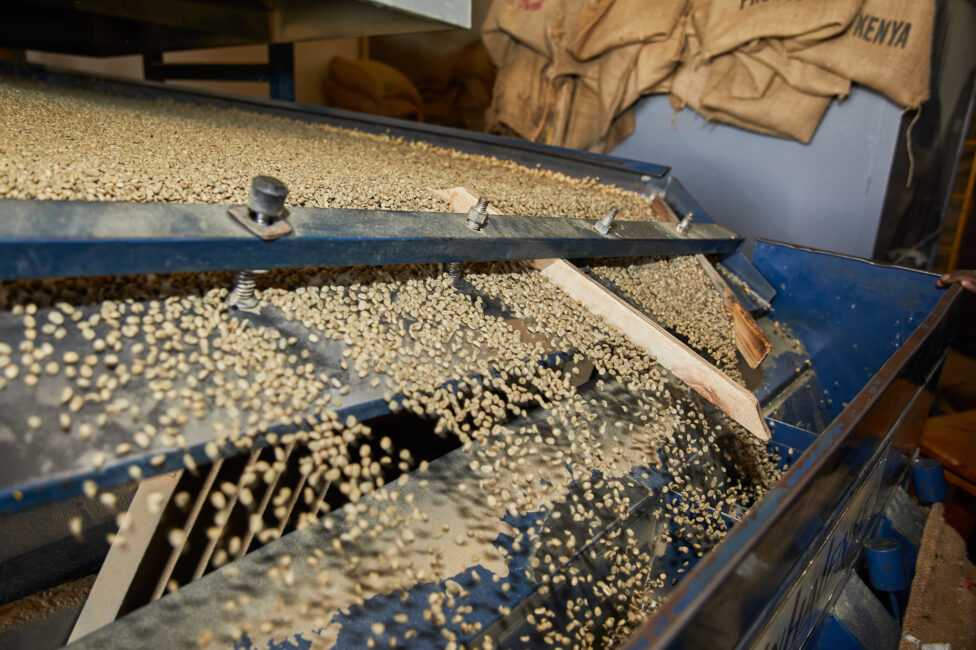
Sorting is of paramount importance to ensure only the best beans end up in the cup. Most coffees are mechanically sorted by weight, size and colour, and then physically hand sorted (sometimes two or three times) by a legion of experienced hand-pickers.
We have an agreement with our local partner that we will pay significantly more than other buyers for first refusal on their 'best of crop' coffees. Everything we purchase is based, as always, on how it cups on the table. We are always looking for distinctive and exceptional coffees. As a result, the coffees we select from this region are of the highest quality, typically displaying complex herbal characteristics, a bright clean cup, a depth of flavour, and a weighty body.
Calling all the cuppers!
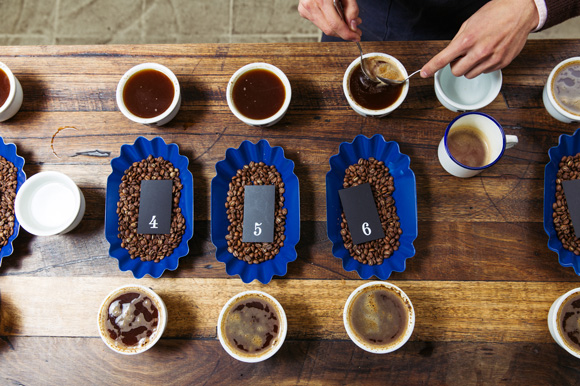
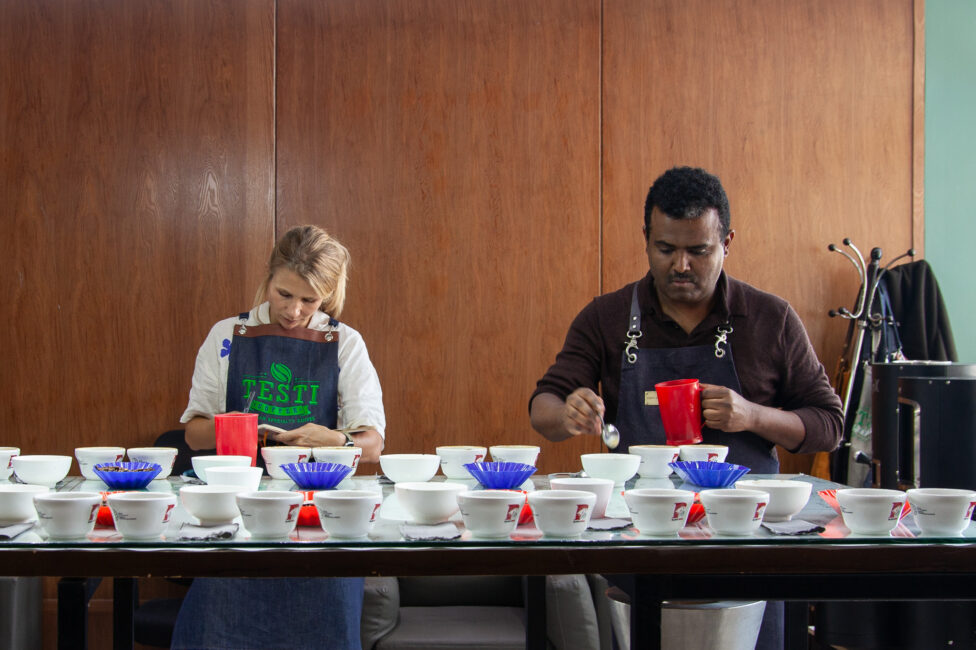
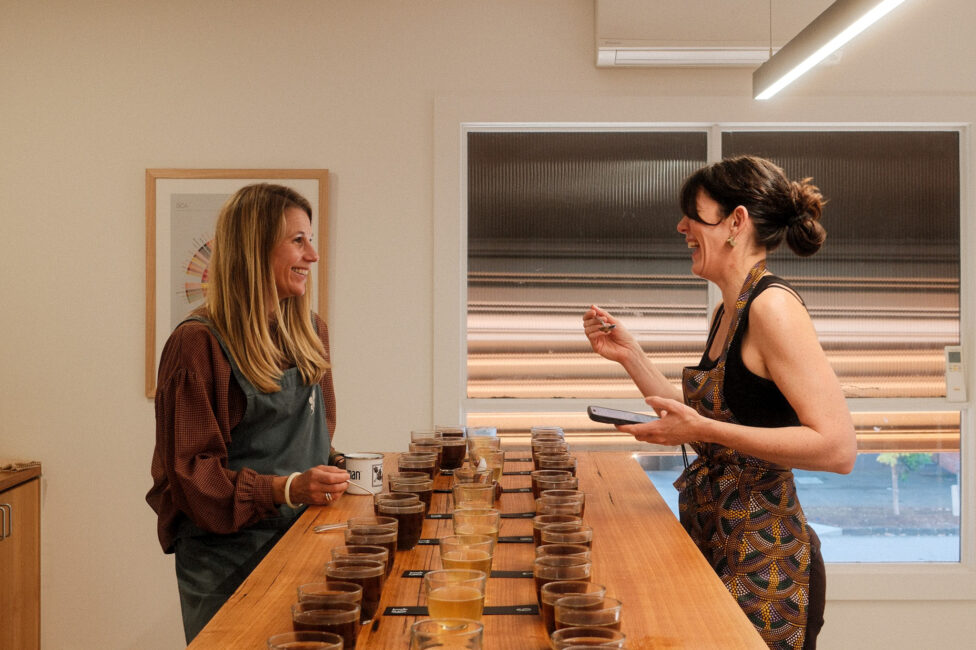
While in Sumatra we cupped some of the latest main crop coffees, which were being prepared for shipment. We cupped an exceptional Aceh Takengon, which had notes of red fruit, a molasses sweetness, and a syrupy, weighty mouthfeel . Another highlight on the table was a semi-washed coffee from Wahana Estate. This had a good body, herbal notes, a hi